7 Tips for Choosing the Right Cladding Machine?

Time:2026-10-23 Author:Charlotte
0%

Choosing the right Cladding Machine is not a simple equipment purchase. It is a production decision.

The global welding equipment market reflects strong industrial demand. MarketsandMarkets reported that the market could reach approximately USD 24 billion by 2029. Fortune Business Insights also identified energy, construction, and heavy manufacturing as major growth sectors. However, these reports usually group cladding with broader welding technologies. That limitation matters. A machine suitable for structural welding may perform poorly on corrosion-resistant overlays.

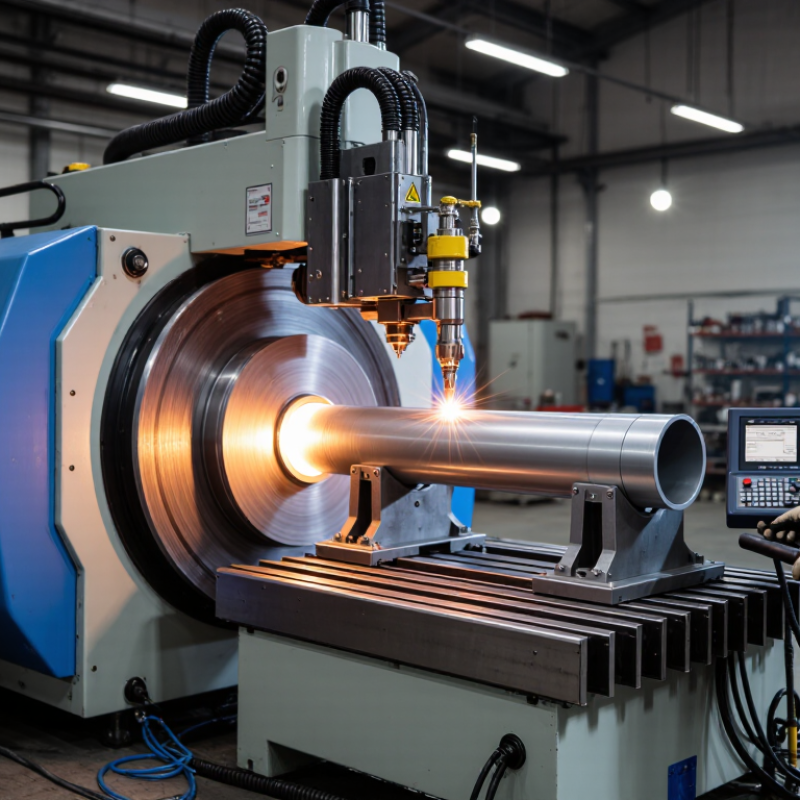
John C. Lippold, a respected welding-metallurgy expert and author, offers a useful principle: “Weldability is not only a material property; it is a process decision.” That idea should guide every specification. Before comparing prices, examine the alloy, substrate, layer thickness, deposition rate, heat input, and required surface finish. Picture the actual workshop: a rotating pipe, a narrow torch path, hot metal, and an operator checking bead overlap under bright inspection lights. Small differences become expensive defects.

The seven tips in this guide focus on practical selection. They cover process compatibility, automation, power control, consumable efficiency, maintenance access, safety features, and supplier support. A machine with impressive output figures may still waste powder or create excessive dilution. That is easy to overlook. I may also be too cautious about automation; some plants need flexibility more than speed. Still, careful comparison remains wiser than choosing the largest model. Performance must match the job.
7 Tips for Choosing the Right Cladding Machine?

Identify Your Cladding Materials and Production Requirements

Choosing the right cladding machine starts with the material, not the machine catalogue. Identify the substrate, cladding alloy, feedstock form, and target thickness. Wire, powder, and strip require different delivery systems and heat control. Record melting temperature, thermal conductivity, hardness, and oxidation sensitivity. Do not guess.

Part geometry matters just as much. A flat plate, narrow shaft, and deep internal bore need different torch access and motion control. Measure the smallest radius, coating width, and required overlap. Then define production targets, including hourly output, batch size, surface tolerance, and acceptable rework. A machine for laboratory trials may struggle during continuous production. That mistake is common.

Experienced teams usually test representative samples before purchasing. Use the actual substrate and cladding material, then examine bond strength, dilution, porosity, hardness, and heat distortion. Ask whether operators can adjust speed, power, feed rate, and shielding gas without complicated delays. Check cleaning time and material changeover too. A fast machine may become expensive when setup is slow. I once underestimated fixture preparation; the coating cycle looked efficient, but the total shift was not. Review maintenance access, replacement parts, training, and inspection records. Reliable selection depends on measured trials, not impressive specifications alone.

Choose the Appropriate Cladding Process and Machine Type

Choosing the right cladding machine begins with the material and repair goal. Start with the substrate. A steel shaft needing wear resistance may suit laser cladding, while a larger surface may require plasma transferred arc or thermal spray equipment. Examine hardness, coating thickness, and heat sensitivity before choosing the process. I once underestimated distortion on a thin component. The repair passed visual inspection but needed extra machining later.

Match the machine to your production reality. A high-power system can deliver faster deposition, but it may waste energy on small parts. Check working envelope, powder or wire compatibility, torch access, and cooling capacity. Keep it measurable. Ask for actual deposition rates under conditions close to yours. A machine that performs well in a demonstration may struggle with curved edges, interrupted surfaces, or frequent material changes.

Control and inspection features also deserve attention. Closed-loop power control can stabilize the melt pool, while motion sensors improve repeatability across long runs. Choose equipment that records key settings, supports operator training, and allows practical maintenance. Check calibration access, spare-part availability, and safety interlocks. Do not ignore testing. Examine cross-sections, bond strength, porosity, and hardness on sample parts before purchase. The cheapest machine is not always economical; downtime, rework, and operator learning can change the calculation. Your first choice may still need revision after production trials.

7 Tips for Choosing the Right Cladding Machine? – Choose the Appropriate Cladding Process and Machine Type

Tip Selection Dimension Key Question Suitable Process or Machine Type Typical Application Important Check
1 Define the base material What is the substrate, and how well does it tolerate heat, dilution, and thermal cycling? Laser cladding for localized heat input; PTA or thermal spray when the substrate and coating requirements allow those methods. Carbon steel, stainless steel, tool steel, nickel-based alloys, and selected cast components. Confirm metallurgical compatibility, preheating needs, and risk of cracking or distortion.
2 Match the coating material Is the priority wear resistance, corrosion resistance, heat resistance, or dimensional restoration? Powder-fed laser cladding for precise alloy deposition; wire laser cladding for higher material utilization; PTA for hardfacing applications. Nickel-, cobalt-, iron-, and carbide-reinforced powders or wires, selected according to service conditions. Verify powder or wire feed compatibility, particle or wire size, and required hardness range.
3 Choose the required layer thickness Do you need a thin protective layer or substantial material buildup? Laser cladding is commonly selected for controlled layers from approximately 0.5 mm upward; wire arc cladding is suitable for larger buildup and high deposition rates. Thin wear or corrosion overlays, edge rebuilding, shaft repair, and large-area dimensional restoration. Check allowable dilution, machining allowance, and the number of layers required.
4 Evaluate part geometry Is the component flat, cylindrical, rotationally symmetrical, or highly complex? Three-axis systems for accessible surfaces; rotary-axis systems for shafts and rings; robotic or multi-axis systems for complex geometries. Valve seats, turbine components, rolls, cylinders, impellers, molds, and cutting tools. Confirm working envelope, rotary payload, torch or nozzle access, and collision avoidance.
5 Balance precision and deposition rate Is dimensional accuracy more important than maximum productivity? Laser cladding for low dilution and precise deposition; plasma or arc-based cladding for higher deposition rates on larger surfaces. Precision repair, narrow tracks, and heat-sensitive components versus broad overlays and heavy buildup. Compare deposition rate, dilution, heat-affected zone, surface finish, and post-machining time.
6 Check automation and monitoring Does the process require repeatable production, closed-loop control, or detailed traceability? CNC or robotic cladding machines with programmable motion, powder or wire control, and optional melt-pool monitoring. Repeat production, repair centers, aerospace components, energy equipment, and quality-sensitive parts. Look for process data logging, parameter repeatability, calibration functions, and operator safeguards.
7 Consider total operating cost What are the costs of consumables, energy, labor, maintenance, machining, and downtime? Select the simplest process that meets the required performance; use automated laser, plasma, or arc equipment when consistency offsets operating cost. Prototype work, low-volume repair, continuous production, and high-value component refurbishment. Request a sample trial and compare total cost per coated area or restored component, not machine price alone.
Practical selection rule: Choose the process and machine type after testing the actual substrate, coating material, geometry, layer thickness, and required performance. Process capability can vary with equipment configuration, consumables, and operating parameters.

Compare Capacity, Precision, Automation, and Technical Specifications

7 Tips for Choosing the Right Cladding Machine

Compare Capacity, Precision, Automation, and Technical Specifications

When selecting a cladding machine, match its capacity with your daily production pattern. A unit rated for 200 parts per hour may slow down with thicker materials or frequent size changes. Ask for tested output, not only catalog speed. Then examine precision. Check dimensional tolerance, repeatability, coating thickness control, and the measurement method behind each figure. During a factory trial, inspect seams under bright light and measure several finished parts. One perfect sample proves very little.

Automation should reduce inconsistency without removing practical operator control. Review loading, alignment, pressure, temperature, and fault recovery functions. Can operators adjust recipes without hidden software limits? Can the machine stop safely when material shifts? These questions reveal gaps that brochures often leave untouched. Also compare motor power, working range, cycle time, tooling options, air demand, electrical requirements, and floor space. Confirm that quoted capacity suits your actual diameter, wall thickness, and cladding material.

Maintenance details deserve careful attention. Look for access to wear parts, lubrication points, sensors, and diagnostic records. Ask how calibration is verified and how quickly replacement components can arrive. In practical evaluations, small access problems often create serious production delays. My own comparisons are not flawless; familiar controls can influence judgment more than expected. Record trial data, reject rates, setup minutes, energy use, and training hours before choosing. Capacity without precision creates waste. Automation without dependable recovery creates downtime.

Evaluate Maintenance Needs, Safety Features, and Operating Costs

7 Tips for Choosing the Right Cladding Machine?

A practical evaluation should begin with maintenance access. Inspect the machine with its panels open, not only during a polished demonstration. Can technicians reach lubrication points without removing half the enclosure? Check belt tension, tooling wear, filter replacement, and software diagnostics. Clear service instructions reduce mistakes. Keep a realistic spare-parts list. Some suppliers underestimate delivery delays. That can turn a small failure into several lost production shifts.

Safety features deserve equal attention. Look for fixed guards, door interlocks, emergency stops, and clear status indicators. Test whether the machine stops quickly and restarts safely after a power interruption. Ask about noise, heat, dust, and operator visibility. Safety training should match the actual controls, not a generic handbook. A well-designed machine still becomes unsafe when rushed operators bypass alarms. Observe a normal production cycle, including cleaning and changeover.

Operating cost extends far beyond the purchase price. Compare electrical consumption, compressed-air demand, tooling life, labor time, and expected scrap. Calculate costs per finished part under realistic workloads. A faster cycle may create more rejects if temperature control is unstable. Request service intervals and warranty conditions in writing. Check calibration requirements and remote-support costs. No estimate is perfect. Leave room for downtime, training, and unexpected wear before approving the investment.

Verify Supplier Support, Customization Options, and Long-Term Value

7 Tips for Choosing the Right Cladding Machine

Verify Supplier Support, Customization Options, and Long-Term Value

A cladding machine should match your materials, production volume, and quality targets. Start by checking the supplier’s technical experience with similar applications. Ask for process data, sample results, and clear tolerance ranges. Real evidence matters more than polished promises. Request operator training, installation guidance, and troubleshooting procedures before signing an agreement.

Confirm the available customization options. Can the machine handle your coating thickness, workpiece dimensions, and preferred powder or wire? Check control settings, feeding systems, cooling arrangements, and inspection access. A small adjustment today may prevent expensive redesign later. Also, ask whether future upgrades can be added without replacing the main structure. Flexibility has practical value.

Supplier support must continue after delivery. Review response times, spare-part availability, software assistance, and maintenance training. Ask who handles urgent faults during production. Test their answers with specific scenarios. Vague replies are warning signs. Compare energy use, consumable waste, cleaning time, and expected service life. The lowest purchase price can hide higher operating costs. A practical evaluation should include downtime and labor, not only machine output.

Leave room for doubt. A successful demonstration does not guarantee stable factory performance. Materials, operators, and environmental conditions can change results. Request a controlled trial using your actual parts when possible. Keep written records of performance claims, exclusions, and support terms. That discipline protects long-term value, even when the final decision feels less exciting.

FAQS

What materials should be identified before choosing a cladding machine?

Identify the substrate, cladding alloy, feedstock form, and target thickness. Wire, powder, and strip need different delivery systems. Record melting temperature, thermal conductivity, hardness, and oxidation sensitivity. Do not guess.

Why does part geometry affect machine selection?

Geometry determines torch access and motion control. A flat plate differs from a narrow shaft or deep internal bore. Measure the smallest radius, coating width, and required overlap. Tight spaces may need special access.

What production targets should be reviewed?

Define hourly output, batch size, surface tolerance, and acceptable rework. A laboratory machine may fail during continuous production. That mistake is common. Include cleaning and fixture time.

Should representative samples be tested before purchasing?

Yes. Test actual substrates and cladding materials when possible. Examine bond strength, dilution, porosity, hardness, and heat distortion. A polished demonstration proves less than a controlled trial.

Which machine settings should operators control?

Operators should adjust speed, power, feed rate, and shielding gas. Controls should not require complicated delays. Small adjustments can prevent uneven coating thickness or excessive heat.

How can customization options be evaluated?

Check coating thickness, workpiece dimensions, feeding systems, cooling arrangements, and inspection access. Ask whether future upgrades can use the existing structure. Flexibility has practical value.

What support should a supplier provide after delivery?

Review installation guidance, operator training, troubleshooting procedures, spare-part availability, and software assistance. Ask who handles urgent production faults. Test their answers with specific scenarios. Vague replies deserve caution.

How should the total machine cost be judged?

Compare purchase price, energy use, consumable waste, cleaning time, labor, downtime, and service life. A low price may hide expensive operation. I once underestimated fixture preparation. The coating cycle looked efficient, but the shift was not.

Conclusion

Choosing the right Cladding Machine begins with a clear understanding of your materials, coating objectives, workpiece dimensions, production volume, and required surface performance. Different cladding materials and applications may require specific heat sources, deposition methods, working ranges, and process controls. Before making a decision, compare suitable machine types according to capacity, precision, repeatability, automation level, energy use, and compatibility with your existing workflow. A machine that meets both current and expected future production needs can improve efficiency and reduce the risk of costly replacement.

Maintenance, safety, and operating costs are equally important when evaluating equipment. Look for accessible components, reliable monitoring systems, practical safety protections, and straightforward maintenance procedures. It is also essential to assess the supplier’s technical support, training, spare-parts availability, warranty coverage, and ability to provide customization when needed. By considering performance, usability, service quality, and long-term value together, you can select a Cladding Machine that supports stable production, consistent results, and sustainable business growth.


Charlotte

Charlotte

Charlotte is a seasoned marketing professional with a deep understanding of the company's portfolio and a passion for elevating its presence in the market. With a keen eye for detail and a commitment to excellence, she ensures that our professional blog is regularly updated with insightful articles......