Choosing Laser Cladding Equipment can change how manufacturers repair, protect, and extend valuable metal components. In practical workshops, the process deposits a controlled layer of alloy onto a worn surface. Shafts, turbine parts, rollers, and hydraulic components may regain useful dimensions without complete replacement.
The value becomes clearer during demanding repair work. A focused laser beam creates a smaller heat-affected zone than many conventional methods. This can reduce distortion and preserve the component’s original structure. Operators can adjust laser power, powder flow, scanning speed, and overlap to match each material. Small changes matter. A visible difference.
Reliable results require more than purchasing a machine. Experienced technicians must examine the substrate, select compatible powders, and control surface preparation. They should record operating data and inspect the finished layer through appropriate testing. These practices support repeatability and help reveal weaknesses before production expands. Equipment suppliers with documented case studies, technical training, and responsive service provide stronger evidence than impressive claims alone.
Still, Laser Cladding Equipment is not the perfect answer for every application. Complex geometries may demand specialized tooling, while poor powder quality can create porosity or uneven bonding. Initial investment, maintenance, and operator training also deserve honest evaluation. A careful trial on representative parts can expose these limitations early. That practical evidence often guides a safer and more cost-effective decision than assumptions. With suitable planning, measurable controls, and continuous review, laser cladding can become a dependable part of modern surface engineering.
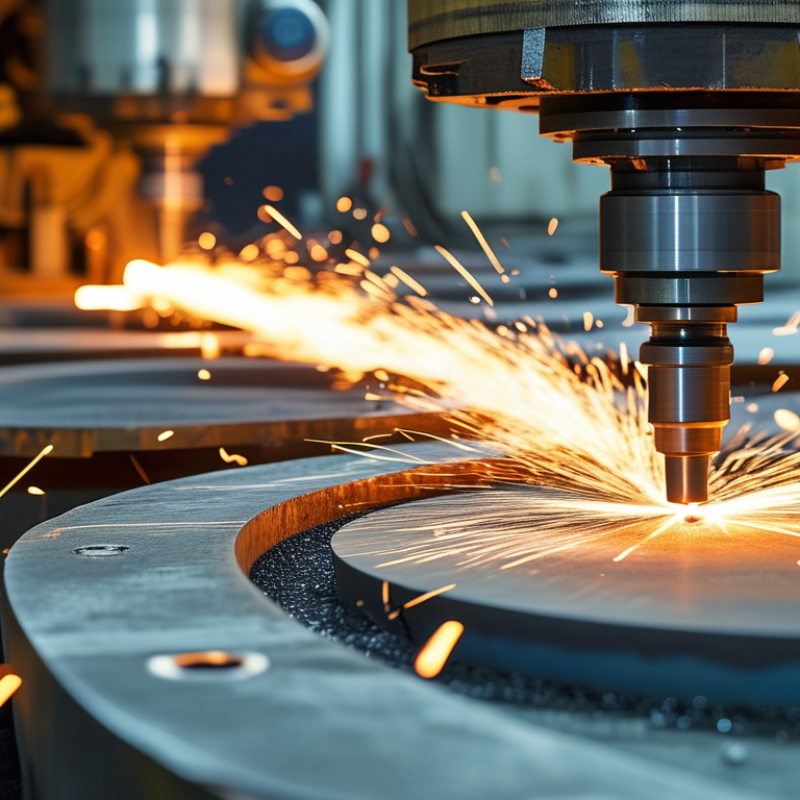
Laser cladding equipment is a precision system that bonds a protective metal layer onto a component. It uses a focused laser beam to melt deposited powder or wire. The material solidifies rapidly on the surface. This creates a metallurgical bond rather than a simple coating.
A typical setup includes a laser source, cladding head, powder feeder, motion platform, shielding gas, and control software. The head directs material into a small molten pool. Sensors may monitor temperature, height, or melt-pool behavior during operation. Skilled technicians adjust laser power, travel speed, feed rate, and overlap. Small changes can affect hardness, porosity, and surface finish.
The equipment can restore worn shafts, seal surfaces, rollers, valves, and other high-value parts. It also supports new wear-resistant or corrosion-resistant surfaces. Compared with heavy machining, it may reduce material waste and preserve more of the original component. However, it is not a magic repair tool. Poor surface cleaning can cause weak bonding. A slight misalignment may produce uneven tracks. Material compatibility, thermal distortion, and post-cladding machining still require careful evaluation. Process trials are often necessary because laboratory settings may not match actual production conditions. The best results come from documented parameters, qualified operators, and inspection after cladding. Mistakes remain possible. Reliable equipment reduces them, but it does not replace engineering judgment.
Laser cladding equipment works by directing a concentrated laser beam onto a metal surface while feeding powder or wire into the molten pool. Shielding gas limits oxidation during deposition. A robotic arm or CNC axis then follows a programmed path, building a dense layer with controlled thickness.
The process is precise, but not effortless. Heat input, powder feed rate, travel speed, and overlap must stay balanced. A small change can create pores, cracking, or excessive dilution. Published reviews in Surface and Coatings Technology commonly report powder utilization between 60% and 90%, depending on the feeding method and material. Wire-fed systems may exceed 90%. That sounds impressive. It is not automatic.
The U.S. Department of Energy has reported that remanufacturing can use about 80% less energy than producing new components. Laser cladding supports this advantage by repairing worn shafts, valves, molds, and turbine parts instead of replacing them. MarketsandMarkets’ 2024 laser cladding equipment report also forecasts double-digit market growth through the decade, driven by repair and surface-enhancement demand. In practice, equipment selection should follow the component’s geometry, alloy, and required deposition rate. A high-power system can waste material on small repairs. I would test actual samples before trusting catalog specifications. Layer quality must be measured, not assumed.
Why Choose Laser Cladding Equipment?
Laser cladding equipment deposits a controlled layer of metal onto a surface. The process uses a focused laser, powder or wire, and precise motion control. Common feedstocks include nickel alloys, cobalt alloys, stainless steel, tool steel, titanium, and carbide-reinforced composites. Material selection depends on wear, corrosion, heat, and impact conditions. In practice, operators often combine a tough matrix with hard particles for mining and oilfield components.
Applications range from repairing turbine blades to rebuilding shafts, valves, molds, and agricultural parts. It also supports new coatings for cutting tools, hydraulic components, and high-temperature fixtures. The 2024 Wohlers Report valued the broader additive manufacturing industry at 20.035 billion US dollars in 2023. That figure includes many technologies, not laser cladding alone. Still, it shows the expanding industrial interest in digitally controlled deposition.
The U.S. Department of Energy has reported that remanufacturing can reduce energy use by about 80% compared with producing new parts. Laser cladding can support that goal by adding material only where damage exists. Less replacement material is needed. Yet the process is not automatically efficient. Poor powder flow, excessive dilution, or uneven preheating can create defects. Engineers should validate hardness, bonding strength, porosity, and dimensional accuracy through documented testing. The numbers can look impressive, but shop-floor results still depend on operator skill and process discipline.
| Material Family | Typical Material Types | Main Properties | Common Applications | Process Considerations |
|---|---|---|---|---|
| Nickel-Based Alloys | Nickel-chromium, nickel-chromium-boron-silicon, and nickel-based superalloys | High-temperature strength, corrosion resistance, and good wear resistance | Turbine components, valve seats, pumps, shafts, chemical-processing parts, and high-temperature tooling | Requires controlled heat input and suitable powder or wire selection to limit dilution and cracking |
| Cobalt-Based Alloys | Cobalt-chromium alloys and cobalt-based hardfacing alloys | Excellent hot hardness, galling resistance, and resistance to abrasion and corrosion | Cutting tools, valve components, pump parts, wear plates, and high-temperature sliding surfaces | Material hardness may require optimized powder delivery, shielding gas, and finishing operations |
| Iron-Based Alloys | Carbon steels, low-alloy steels, stainless steels, and martensitic wear-resistant alloys | Broad cost range, high hardness potential, and compatibility with many steel substrates | Rolls, gears, molds, dies, rails, agricultural tools, and general mechanical components | Preheating and post-cladding heat treatment may be needed for some high-carbon or hardened steels |
| Stainless Steel Alloys | Austenitic, ferritic, martensitic, and precipitation-hardening stainless steels | Corrosion resistance, clean surface finish, and useful mechanical strength | Food-processing equipment, chemical machinery, marine parts, molds, and hydraulic components | Shielding and heat control help maintain corrosion performance and reduce oxidation |
| Tool Steels | Hot-work, cold-work, and high-speed tool steels | High hardness, compressive strength, and resistance to deformation | Forging dies, injection molds, stamping tools, cutting edges, and forming equipment | Controlled cooling and thermal management are important for minimizing cracking and distortion |
| Carbide-Reinforced Materials | Tungsten carbide or other hard particles within nickel-, cobalt-, or iron-based binders | Very high abrasion resistance and improved service life in severe wear conditions | Mining tools, drilling components, wear rings, impellers, agricultural parts, and slurry-handling equipment | Laser parameters must limit carbide dissolution and preserve the desired particle distribution |
| Copper-Based Alloys | Copper alloys, bronze, and selected copper-chromium systems | High thermal and electrical conductivity with useful corrosion resistance | Electrical contacts, heat-management components, molds, and conductive repair areas | High reflectivity and thermal conductivity require appropriate laser wavelength, power, and process control |
| Aluminum-Based Alloys | Selected aluminum-silicon and aerospace-grade aluminum alloys | Low density, good thermal conductivity, and potential for localized repair or surface modification | Aerospace structures, automotive components, housings, and lightweight engineering parts | Oxide control, porosity prevention, and compatibility between clad and substrate are key concerns |
The benefits are practical. Laser cladding can improve resistance to abrasion, corrosion, erosion, and high-temperature wear. Its narrow heat-affected zone helps preserve dimensional accuracy. Automated powder or wire feeding also supports repeatable coating thickness. The U.S. Department of Energy’s Materials Industry of the Future report has stated that remanufacturing may use about 80% less energy than producing new parts. Laser-based repair can support that approach by extending component life. A MarketsandMarkets industry report projected strong growth for the laser cladding market, reflecting wider adoption in energy, aerospace, mining, and heavy manufacturing.
The process is not automatically cheaper. It needs qualified operators, surface preparation, material compatibility checks, and careful parameter control. Poor powder delivery can create pores or uneven tracks. I have seen impressive coatings fail because inspection came too late. This is the uncomfortable part. Equipment selection should consider laser power, deposition rate, working envelope, monitoring capability, and after-machining needs. Reported benefits vary by alloy, geometry, and operating conditions. Independent hardness, adhesion, and wear testing remains essential before production release.
Why Choose Laser Cladding Equipment?
Selecting laser cladding equipment should begin with the repair task, not the machine’s advertised power. Measure substrate material, coating alloy, damaged depth, and required hardness. A shaft needing a 0.8 mm wear layer differs greatly from a turbine component requiring corrosion protection. Laser wavelength, beam diameter, powder or wire delivery, and heat control directly affect bonding quality.
Wohlers Report 2024 valued the global additive manufacturing industry at 20.035 billion US dollars in 2023. Laser cladding is only one segment, but this figure reflects growing demand for controlled material deposition. A 2024 market analysis by MarketsandMarkets also identifies repair and remanufacturing as major growth applications. Still, market growth does not guarantee a suitable system. Ask for measured deposition efficiency, dilution rate, porosity results, and repeatability data. A larger laser is not automatically better. I have seen oversized systems create excessive heat and unnecessary finishing work.
Tips: Test representative samples before purchase. Use the same alloy, geometry, and surface condition as production parts. Request cross-sectional microscopy, hardness mapping, and dimensional inspection. Check whether the control system records power, travel speed, powder flow, and temperature. Training and service response matter too. A technically impressive machine can underperform when operators lack process experience. Selection is rarely perfect; review early trial failures honestly before approving the final configuration.
Laser cladding equipment should be selected according to the required build-up thickness, deposition rate, component size, and heat input. Precision repairs generally use lower laser power and deposition rates, while large-area restoration and wear protection require higher power and powder delivery capacity. The values shown are representative engineering ranges and are not associated with any company or brand.
: It bonds a protective metal layer to a component’s surface. A focused laser melts powder or wire, creating a metallurgical bond. It is more than simple surface painting.
A laser forms a small molten pool on the metal surface. Powder or wire enters the pool as the cladding head moves. Shielding gas helps limit oxidation. The layer solidifies quickly.
It can restore worn shafts, seal surfaces, rollers, valves, molds, and turbine parts. It may also protect new parts from wear or corrosion. Part geometry still matters.
A typical system includes a laser source, cladding head, feeder, motion platform, gas supply, and control software. Sensors may track temperature, layer height, or melt-pool behavior. Small systems may use robotic or computer-controlled movement.
Laser power, travel speed, feed rate, and track overlap strongly affect results. Incorrect settings can cause pores, cracks, uneven tracks, or excessive dilution. Tiny changes matter.
It can use less material than replacing or heavily machining a component. Repairing an existing part may also reduce energy use. One reported estimate suggests remanufacturing can use about 80% less energy. Actual savings vary.
No. Material compatibility, cleaning, heat distortion, and final machining require evaluation. Poor cleaning can weaken the bond. A powerful system may waste material on a small repair. It is not magic.
Measure layer thickness, hardness, porosity, bonding, and surface finish after processing. Test samples should match real production conditions when possible. Catalog specifications are not enough. I would verify them.
Laser Cladding Equipment is an advanced surface-engineering system used to deposit a protective layer of material onto a component with controlled heat and precision. It generally combines a laser source, powder or wire delivery system, motion-control platform, shielding gas, and monitoring functions. During operation, the laser melts the added material and a small portion of the substrate, creating a strong metallurgical bond while limiting heat distortion. This process supports materials such as nickel-based alloys, cobalt alloys, stainless steels, tool steels, and selected carbide-reinforced mixtures.
Laser cladding is suitable for repairing worn parts, improving resistance to corrosion, erosion, abrasion, and high temperatures, and producing specialized surfaces for industrial components. Its main benefits include low dilution, accurate deposition, reduced material waste, and extended service life. When selecting Laser Cladding Equipment, users should consider laser power, deposition rate, working area, material compatibility, automation level, process monitoring, maintenance requirements, and overall operating cost. The best choice should match the component geometry, coating objectives, production volume, and required quality standards.

Duomu