 Duomu
Duomu
1 / 1
Cooling swiftly, up to 10⁶ ℃/s. Solidifying swiftly, it is easy to get the fine grains microstructure or the cenotype which cannot form under equilibrium producing conditions.
It is possible to control the focus distance and penetration to adjust the dilution rate, due to the metallurgical bonding between the welding material and the base.
Low heat impact and tiny deformation, only melting on the surface in the course of cladding (0.1-0.5mm).
High density of the cladding layer. There is not any shortage of holes, slag, and cracks, with hardness reaching 18-60HRC.
Barely any limitation in choosing the powder, even allowing high melting point material cladding on low melting point ones.
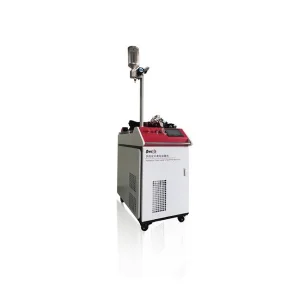
Proper for remote transmission and suitable for repairing huge parts directly on-site.
It is possible to clad in the place of grooves, deep holes, etc., because there is no need for physical contact during laser cladding.
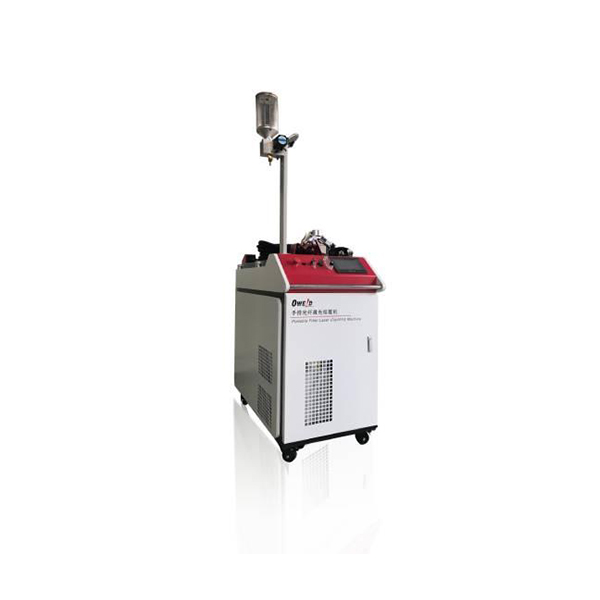
Works exceptionally well using hand-held laser cladding systems for parts with complex shapes, without the trouble of programming.


With swift cooling rates up to 10⁶ ℃/s, the solidification process happens rapidly. This makes it easy to obtain a fine grain microstructure or a cenotype structure that cannot be formed under balanced producing conditions.
Laser cladding creates a reliable metallurgical bonding between the welding material and the base. This process allows operators to control the focus distance and penetration depth to achieve the desired dilution rate.
No. Laser cladding results in low heat impact and tiny deformation. The melting is localized, occurring only on the surface layer (0.1–0.5 mm) in the course of cladding.
The cladding layer features a very high density, and is free of defects such as holes, slag, or cracks. The hardness achieved ranges from 18 to 60 HRC.
Yes, because it is a non-contact process, it is possible to clad in tight spaces like grooves and deep holes. Additionally, hand-held laser cladding systems can repair complex shapes on-site, and it is proper for remote transmission applications.
No. By utilizing a hand-held laser cladding system, complex parts can be processed easily without the hassle of programming.