Q:
What is Plasma Transferred Arc (PTA) welding?
Plasma Transferred Arc (PTA) welding is an industrial thermal process used to apply wear and corrosion-resistant metallic layers over base materials. It utilizes a collimated plasma arc to melt both the substrate surface and the filler material (typically powder) to form a dense, metallurgically bonded cladding.
Q:
What are the main advantages of using PTA hardfacing?
PTA hardfacing offers exceptionally low dilution levels (5% to 10%), high deposition rates, and a minimal heat-affected zone. This results in superior wear, erosion, and corrosion resistance compared to conventional welding methods.
Q:
Which materials are typically applied using PTA cladding?
Common alloys applied include cobalt-based alloys (Stellite), nickel-based alloys, iron-based alloys, and tungsten carbide composites. These materials are chosen based on the specific wear, impact, or temperature requirements of the application.
Q:
What industries benefit most from PTA welding technology?
PTA welding is widely utilized in heavy industries such as mining, oil and gas, power generation, steel manufacturing, chemical processing, and agricultural equipment production to extend the service life of critical components.
Q:
How does PTA welding differ from Laser Cladding?
While Laser Cladding provides lower heat input and slightly lower dilution, PTA welding is highly cost-effective, offers much higher deposition rates, and is better suited for depositing thicker layers and handling larger component surface areas efficiently.
Q:
Can the PTA welding process be automated?
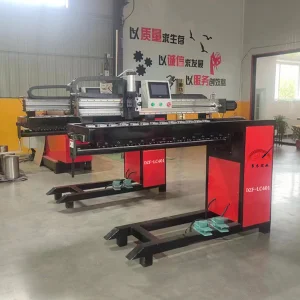
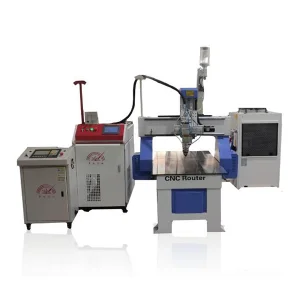
Yes. The PTA welding process is highly stable and repeatable, making it ideal for robotic integration and automated CNC systems. Automation ensures consistent overlay quality, precise thickness control, and uniform microstructure.
 Duomu
Duomu