 Duomu
Duomu
1 / 1
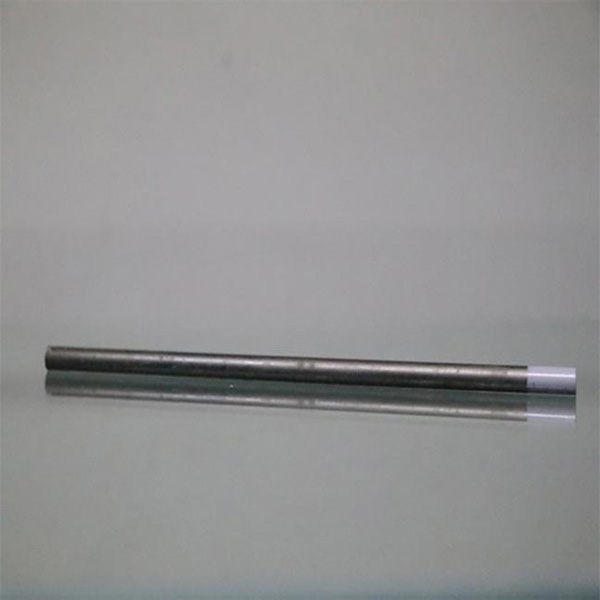
It is in possession of material with high-melting, high density, anti-corrosion, good conductivity of heat and electricity, which is fixed by tungsten clamp and back cap in the torch. Normally, the diameters (2.4mm - 8.0mm) are applied.
In main arc, it means for cathode, work piece does for anode. In pilot arc, it means for cathode, nozzle does for anode.
When you put on or take off it, please make sure the pilot is off.
Generally, it is proper to retreat (2-4mm) into nozzle as putting on, which is available to tungsten calibrator. Please grind the tungsten electrode when the arc stream is disperse. It should be central and the angle should be 22° as grinding to avoid a short circuit that is proper for starting arc.
It appears disparate colour through grinding and polishing, which means the tungsten content is different. The launch efficiency of pure tungsten is very low and it would form crystallization in the high temperature to make the tungsten wire break.
In order to overcome these characteristics, the rare earth element is add to it, which It can not only increase the recrystallization temperature, but also activate electron emission.
The material features high-melting point, high density, anti-corrosion properties, and good thermal and electrical conductivity.
Normally, diameters between 2.4mm and 8.0mm are applied. The electrode is held in place using a tungsten clamp and a back cap inside the torch.
In the main arc, the electrode acts as the cathode and the work piece acts as the anode. In the pilot arc, the electrode acts as the cathode and the nozzle acts as the anode.
It is general practice to retreat the electrode 2-4mm into the nozzle when setting it up. If the arc stream disperses, the electrode must be ground centrally at a 22° angle to facilitate starting the arc and prevent short circuits.
Pure tungsten has low electron emission efficiency and easily crystallizes under high temperatures, which makes the wire break. Adding rare earth elements prevents this by raising the recrystallization temperature and activating electron emission.