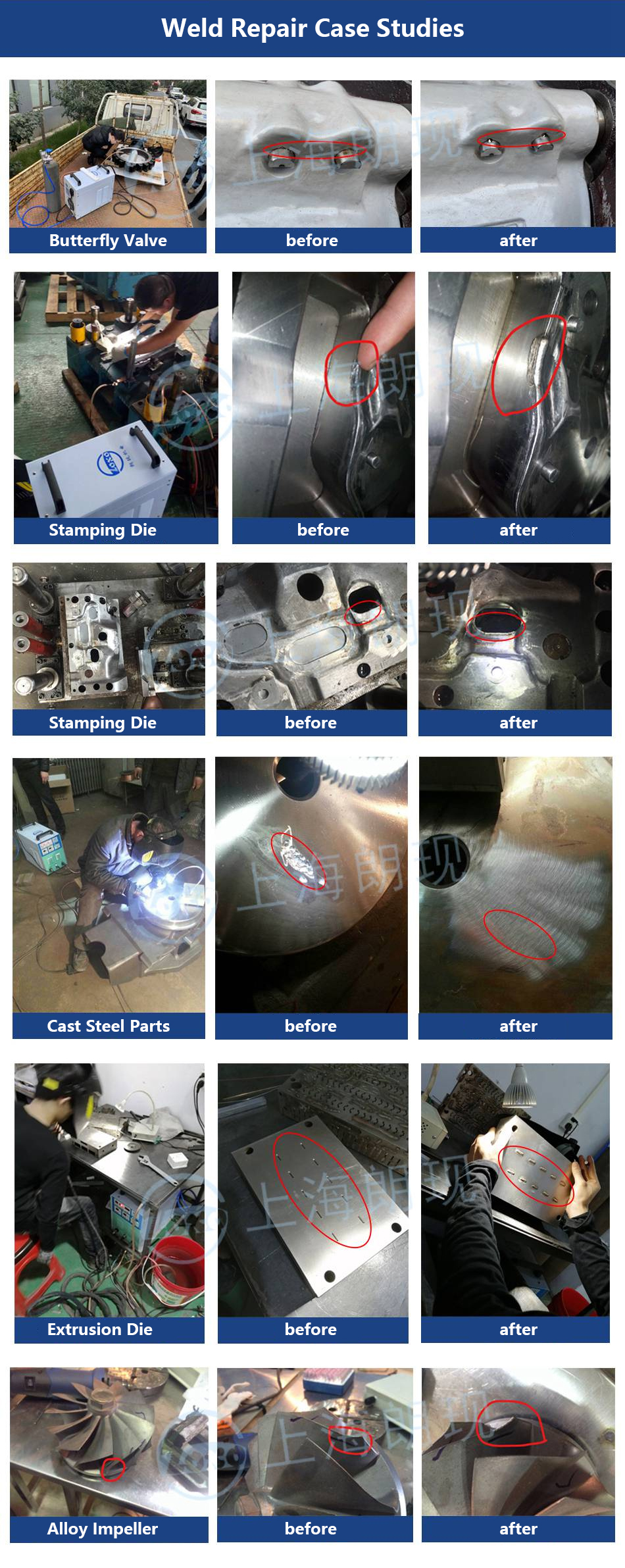
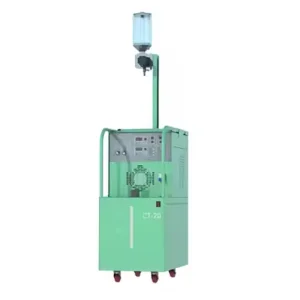
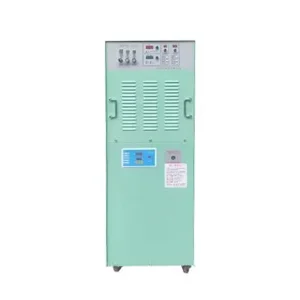
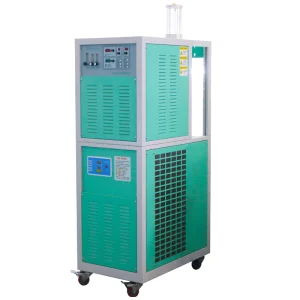
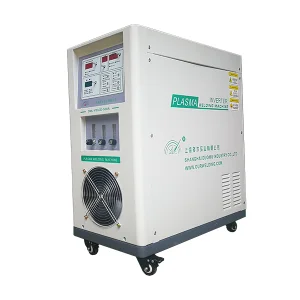
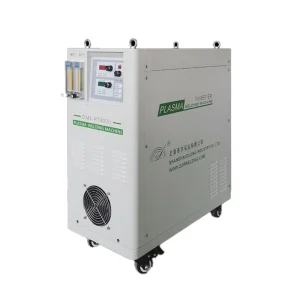
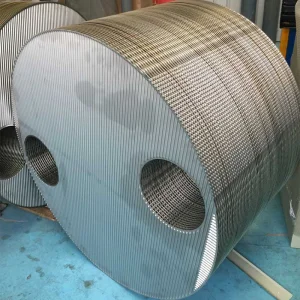
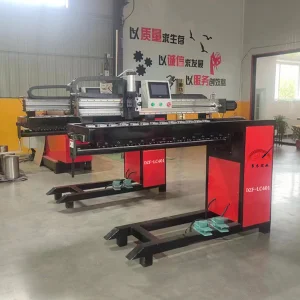
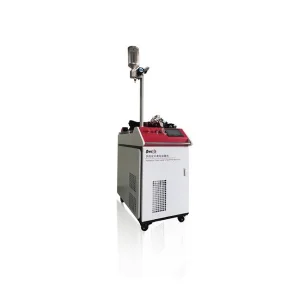
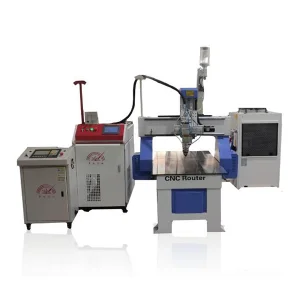
Small heat affected zone. No need for preheating treatment, no annealing of the workpiece after welding. No deformation and collapsed edge. No porosity and sand holes. Accurate and precise welding of small and precise geometrical zones with the finest wires up to 0.1-0.2 mm, easy to use and flexible, direct on-site repair, eliminating the need for costly separation of the workpiece or repair part. It can be used to repair cracks, chips, corners, sand holes and after wear and tear.
No deformation, no edge collapse, no pores, and no sand holes.
High precision and accuracy — capable of welding any fine geometric area; the thinnest welding wire available is 0.1–0.2 mm.
Easy and flexible to use; on-site repair is possible, eliminating the need for costly disassembly of workpieces or repair sections.
Applicable for repairing cracks, chipping, edges, blowholes, and wear damage. It can also be used for re-welding workpieces after EDM, nitriding, or soft nitriding treatment.
Strong bonding strength; suitable for various machining processes without issues such as poor adhesion or peeling.
Capable of efficient, low-temperature precision repair welding over large areas.
By using materials of different hardness, various post-weld hardness levels (e.g., up to HRC 60°) can be achieved.
Frequently Asked Questions (FAQ)
Does this welding repair process cause structural deformation?
No. This process features a very small heat-affected zone (HAZ), which guarantees no deformation, no edge collapse, no pores, and no sand holes.
What is the minimum thickness of the welding wire that can be used?
The process is designed for high precision and accuracy, allowing the welding of extremely fine geometric areas using wire as thin as 0.1 to 0.2 mm.
Is on-site repair possible with this technology?
Yes, it is easy and flexible to use. On-site repairs are fully supported, which eliminates the need for costly disassembly of workpieces or repair sections.
What types of defect repairs are supported?
It is highly effective for repairing cracks, chipping, edges, blowholes, and wear damage. It can also be utilized for re-welding workpieces that have undergone EDM, nitriding, or soft nitriding treatment.
Will the repaired section peel off during subsequent machining?
No. The process provides exceptionally strong bonding strength, rendering the welded components suitable for various machining operations without issues such as poor adhesion or peeling.
What level of post-weld hardness can be achieved?
By using welding materials of different hardness levels, you can achieve various post-weld hardness levels, up to HRC 60°.
 Duomu
Duomu