PTA Welding Supplier & Factories for United States

Premium Automated Plasma Transferred Arc Cladding Systems & Advanced Laser Hardening Integration for Wear and Corrosion Control

10+
Years of R&D Excellence
150+
Industrial Installations
<5%
Dilution Control Rate
AWS
ASME Compliant

PTA Welding Solutions: Empowering US Industrial Metallurgy

Providing heavy manufacturing operations in the US with reliable hardfacing tools to combat extreme wear, thermal cycling, and corrosive chemical attack.

Industrial Challenges in the United States

Heavy industries across the US—ranging from hydraulic oilfields in the Permian Basin and mining operations in the Midwest, to agricultural machinery production in the Corn Belt—all face the constant challenge of mechanical wear and oxidation. Conventional thermal spray and manual stick welding methods often fail under extreme loads due to high dilution rates, insufficient bonding strength, and severe heat-affected zones (HAZ) that lead to component distortion.

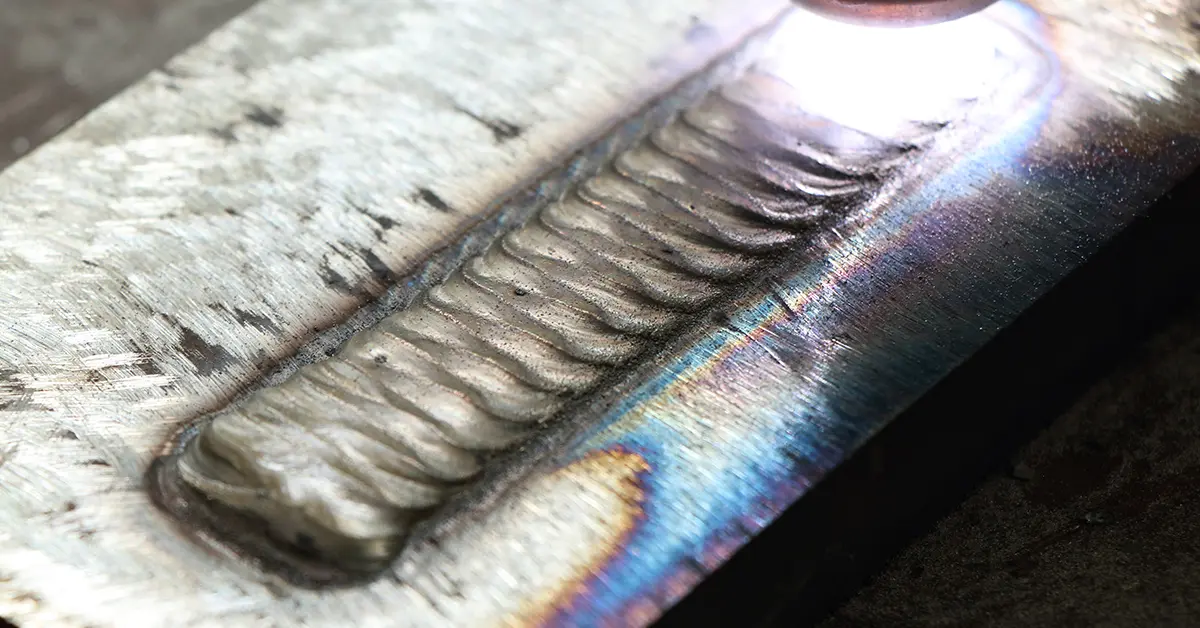
Our Plasma Transferred Arc (PTA) welding systems solve this issue by offering a highly localized heat source with a concentrated plasma arc. By injecting alloy powders directly into the arc stream, our systems create a true metallurgical bond with dilution rates controllable down to 5%. This level of precision helps extend the service life of critical parts such as industrial valves, hydraulic cylinders, and extruder screws by up to 300%.
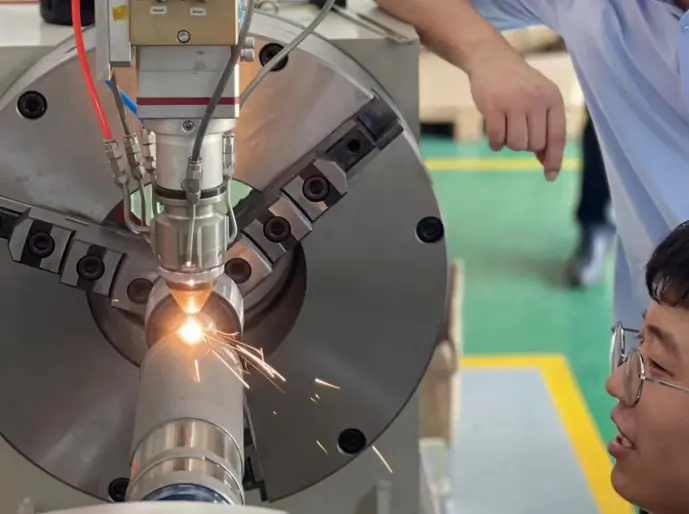
  • Optimized for tungsten carbide (WC) and cobalt-based superalloy powders.
  • Fully integrated CNC and robotic paths designed for repeatable weld profiles.
  • Maintains base metal integrity through localized heat-affected zones.
Duomu PTA Welding System R&D and Technology Center

Top Automated PTA Cladding Equipment for US Fabricators

Engineered for high duty-cycles and seamless integration into modern manufacturing lines.
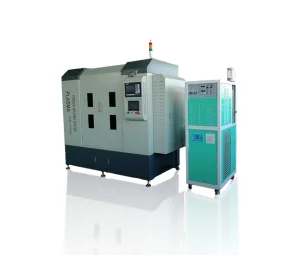
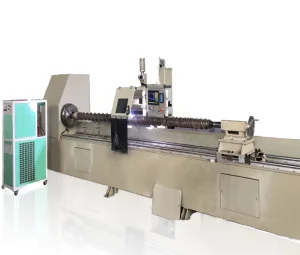
Automatic cutting picks plasma cladding equipment DJC-LC305

China DJC-LC305 Automatic cutting picks plasma cladding equipment Manufacturer, Factory

Designed for high-efficiency hardfacing of road header picks and coal mining bits. Equipped with automated indexing rotators for reliable, continuous weld runs.
View Tech Specs
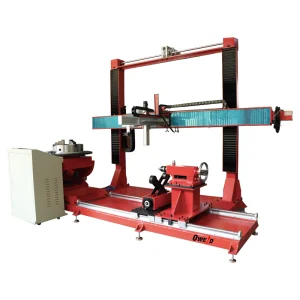
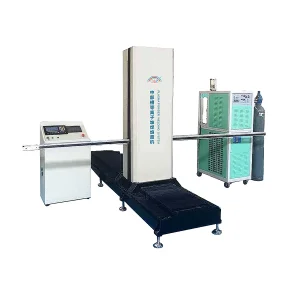
Double column gantry welding system DLM-LC501

High-Quality DLM-LC501 Double column gantry welding system Factory, Factories

A heavy-duty double column gantry structure for cladding large flat plates, guide rails, and massive wear liners. Offers multi-axis CNC movement.
View Tech Specs
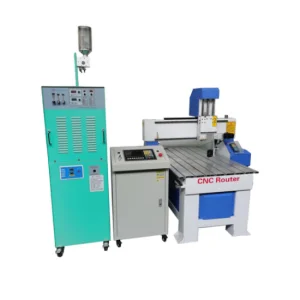
Planar plasma surfacing system DNC2000

High-Quality DNC2000 Planar plasma surfacing system Manufacturer, Supplier

Precision 2D/3D CNC table-based plasma cladding system. Ideal for metal-to-metal sealing surfaces, industrial shear blades, and custom dies.
View Tech Specs
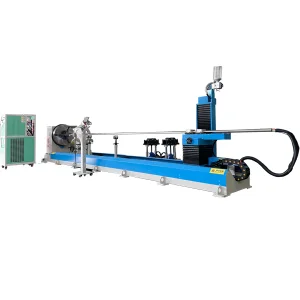
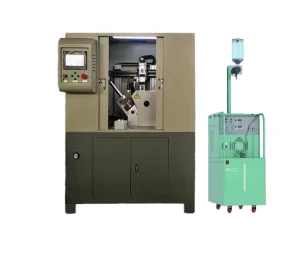
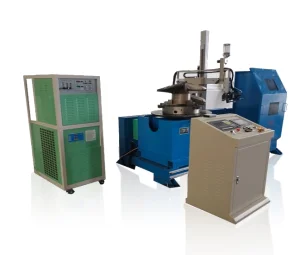
Double cone injection molding machine inner cladding DSL-LC401

Custom DSL-LC401 Double cone injection molding machine barrel inner hole cladding machine Suppliers, Factories

A specialized system built to overlay wear-resistant alloys on the inner diameter surfaces of injection molding barrels and extruder sleeves.
View Tech Specs

Macro Industry Dynamics: The USA PTA Welding Market & Global Supply Chains

Analyzing key technology trends, cost structures, and manufacturing requirements for local US enterprises.
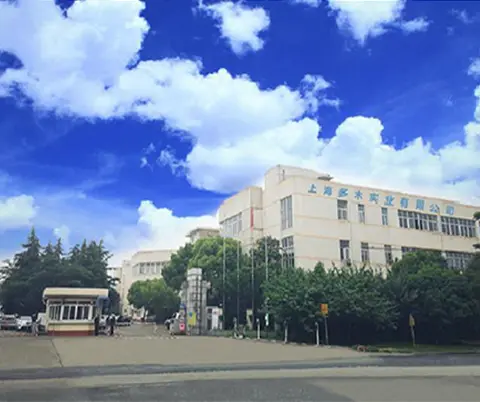
Production floor of Shanghai Duomu PTA assembly line

The Shift Toward Automation & Remanufacturing

In response to rising raw material costs and supply chain constraints, US industries are increasingly prioritizing remanufacturing over buying new components. By rebuilding worn metal parts back to original dimensions using PTA cladding, plants can save up to 70% of the cost of new equipment. This process also improves resistance to mechanical and chemical wear.

Our equipment features open PLC architectures (Siemens, Delta) that allow engineering teams in the US to easily program custom cladding parameters. By maintaining control over the gas flow, powder feed rates, and travel speeds, operators can adapt the system to run Fe-based, Ni-based, Co-based, or Carbide-containing matrices depending on the application.

This flexibility makes PTA systems a cost-effective, high-deposition alternative to conventional welding systems, allowing facilities to process larger components with shorter cycle times.

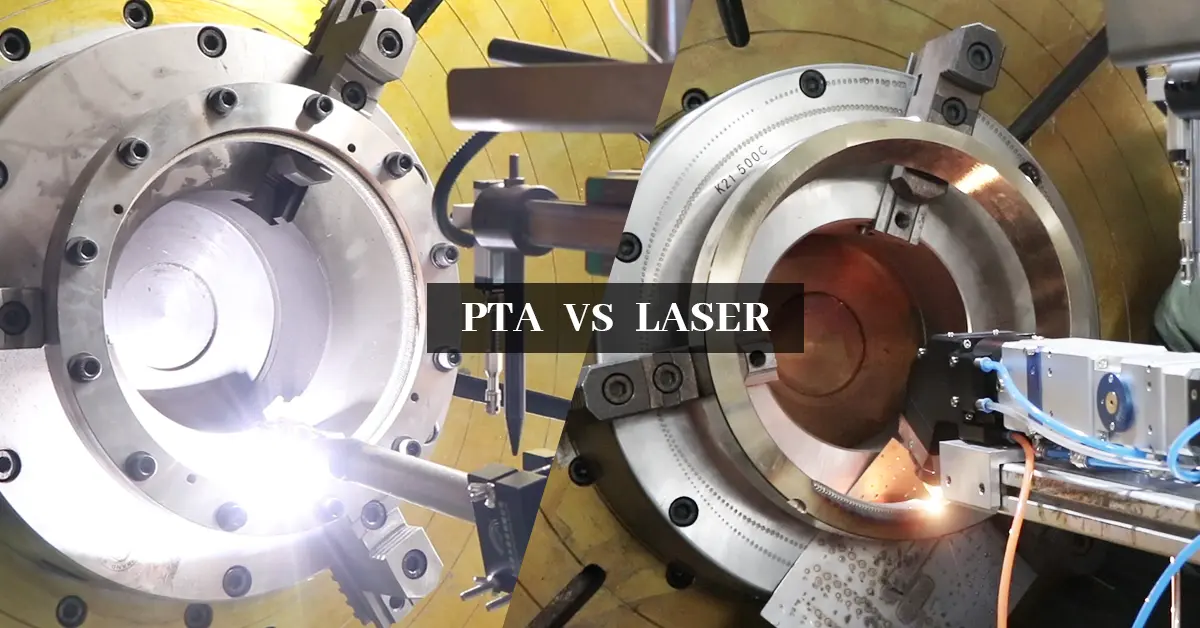
PTA vs. Laser Cladding: A Deep Technical Comparison for US Project Engineers

Process Feature Plasma Transferred Arc (PTA) Cladding Laser Cladding (DED-L) Traditional GTAW / MMA Hardfacing
Energy Source Concentrated Thermal Plasma (Argon) Coherent Laser Beam (Fibre/Diode) Electric Arc / Consumable Electrode Submerged Arc / Open Arc Wire
Deposition Rate High (2.0 to 10.0 kg/hr) Moderate (0.5 to 4.0 kg/hr) Low to Moderate (1.0 to 3.5 kg/hr) High (3.0 to 12.0 kg/hr)
Dilution Rate Low (3% – 8%) Ultra-Low (1% – 5%) High (15% – 30%) Very High (20% – 40%)
Metallurgical Bond Excellent (True fusion bond) Excellent (True fusion bond) Good (Risk of inclusions) Good (High thermal stress)
Equipment CapEx Medium ($35,000 – $90,000) High ($120,000 – $350,000+) Low ($5,000 – $15,000) Medium ($15,000 – $40,000)
Carbide Retention High (Low dissolution of WC) Excellent (Minimal heat input) Poor (High heat melts carbides) Very Poor (Complete carbide dissolution)

Targeted Regional Application Scenarios in the United States

How PTA systems are utilized across key US industrial sectors to extend part lifetimes.

PTA cladding for Agricultural Machinery

Agricultural Machinery

Applies tungsten carbide coatings to tillage tools, harvester blades, and seeding discs across the US Midwest to resist abrasive soil wear.

PTA cladding for Aerospace & Defense

Aerospace & Defense

Enables precise deposition of cobalt and nickel superalloys on turbine blades and compressor stators under strict AWS D17.1 specifications.

PTA cladding for Petroleum & Oilfield Machinery

Petroleum Machinery

Clads drill stabilizers, mud motor rotors, and API 6A valves in Texas oilfields to protect them from high-pressure sand erosion.

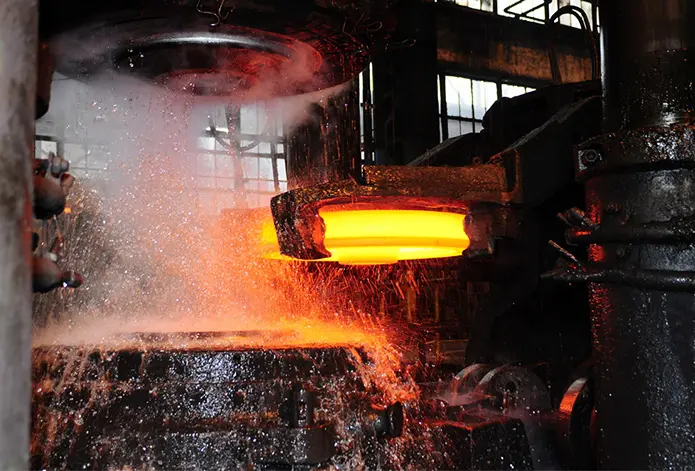
PTA cladding for Metallurgy Casting & Forging

Metallurgy & Casting

Clads continuous caster rolls and forging dies in Great Lakes steel mills to protect them from high-temperature wear and thermal fatigue.

R&D Capability & High-Duty Power Supplies

Shanghai Duomu has designed and manufactured PTA and laser cladding systems for over ten years. Our internal engineering department focuses on developing reliable high-frequency inverter power supplies, precision powder feeders, and stable plasma welding torches.

To ensure high performance over long production runs, our PTA torches feature optimized cooling channels that prevent overheating, even during continuous 100% duty cycle operation. We work closely with our clients to supply custom powder feeders and automated indexing positioners that integrate smoothly with standard PLC control architectures.

Our laser cladding division also builds turn-key multi-axis robotic systems for heavy remanufacturing applications, helping plants restore worn shafts, cylinders, and large gears back to print specifications.
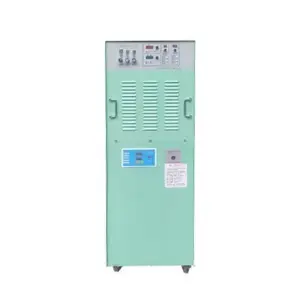
Shanghai Duomu integrated plasma cladding workspace

Local Compliance, Standards & Quality Control

For US manufacturers, adherence to codes established by organizations like the American Welding Society (AWS) and the American Society of Mechanical Engineers (ASME) is essential. Our PTA systems are designed to meet these requirements, ensuring that your cladding procedures can be qualified to standard codes.

  • ASME Section IX: Consistent current, voltage, and powder delivery controls allow for clear qualification of Weld Procedure Specifications (WPS) and Procedure Qualification Records (PQR).
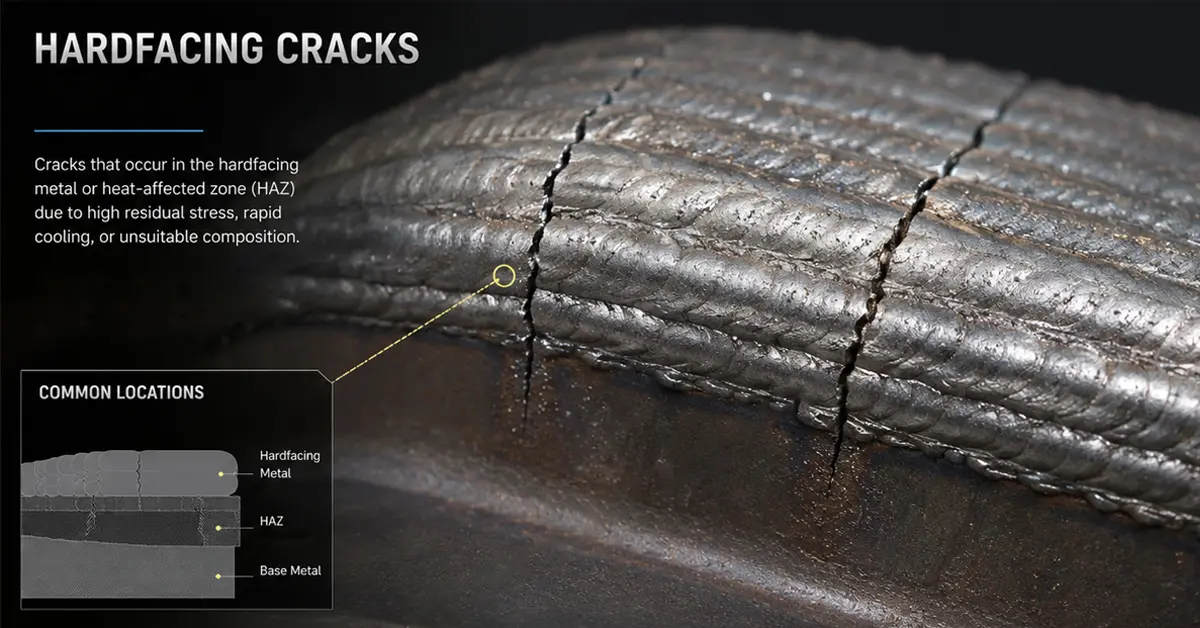
  • AWS D14.7: Precise control of heat input helps prevent micro-cracking and HAZ softening in critical mining equipment rebuilds.
  • API 6A / API 17D: Excellent torch alignment ensures repeatable cladding on oil and gas gate valve seats.

Each unit ships with complete electrical schematics, calibration records, and gas-flow verification data, helping your quality control teams smoothly complete on-site commissioning.

Technological Roadmap: The Future of Cladding

PTA welding technology is moving toward greater integration with real-time sensors and closed-loop control systems. Our development roadmap focuses on incorporating optical monitoring and sensor technology directly into the cladding process:

1. Closed-Loop Thermal Monitoring

Integrates infrared pyrometers to monitor the weld pool temperature in real-time, automatically adjusting arc current to maintain consistent bead dimensions.

2. Automated Multi-Powder Mixing

Allows dual powder feeders to dynamically mix alloys during cladding, creating functionally graded coatings that transition from a ductile base metal interface to a hard, wear-resistant outer surface.

Industrial PTA Equipment Portfolio

A broad selection of automated, robotic, and custom-configured cladding machines engineered to improve production throughput.
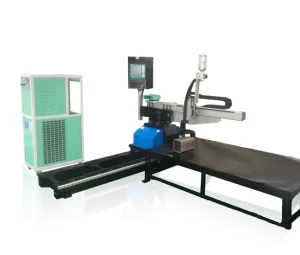
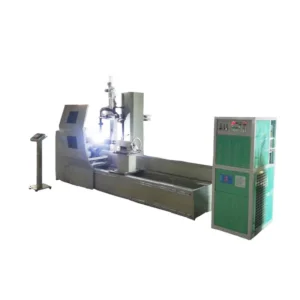
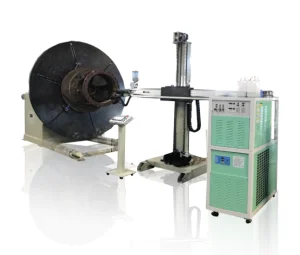
Cantilever plasma surfacing system DXB-NC301

High-Quality DXB-NC301 Cantilever plasma surfacing system Manufacturer, Supplier

Features a robust cantilever beam configuration for external circumferential cladding of long rollers, pipes, and cylinders.
View Tech Specs
Hydraulic rod automatic plasma cladding machine DYY-LC501

High-Quality DYY-LC501 Hydraulic rod automatic plasma cladding machine Suppliers, Factories

Designed to apply low-dilution, corrosion-resistant bronze or nickel alloy layers to hydraulic rods used in demanding environments.
View Tech Specs
Automatic plasma cladding surfacing system DZB-NC401

High-Quality DZB-NC401 Automatic plasma cladding surfacing system for middle groove Manufacturer, Manufacturers

Built to handle the demanding wear conditions in underground mining equipment, such as coal conveyor middle grooves.
View Tech Specs
Automatic plasma welding machine FB-200P

High-Quality FB-200P Automatic plasma welding machine for valve Manufacturers, Factory

A compact system for precision cladding of industrial valve seats, gate valves, and pressure disks. Maintains excellent bead height consistency.
View Tech Specs
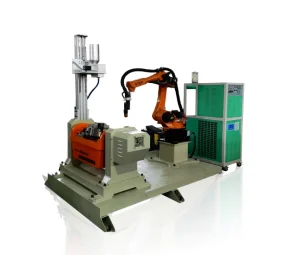
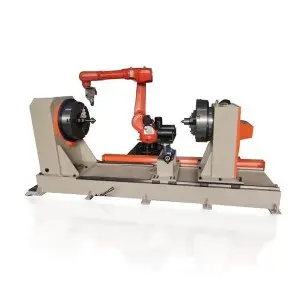
Automatic plasma surfacing robot DH1440-B06

China DH1440-B06 Automatic plasma surfacing robot Manufacturers, Suppliers

An articulated 6-axis robotic arm integrated with a PTA cladding package. Enables precise path control for complex 3D shapes.
View Tech Specs
Manipulator positioner DH3-HV1700-B06

Custom DH3-HV1700-B06 manipulator positioner Suppliers, Factories

A heavy-duty tilt-and-turn positioner that synchronizes with the main controller to maintain proper weld positioning on complex shapes.
View Tech Specs
Automatic screw welding machine DLG-NC401

China DLG-NC401 Automatic screw welding machine Manufacturer, Suppliers

Specifically configured for cladding extruder and conveyor screws. Features pitch control to ensure consistent overlay thickness.
View Tech Specs
Automatic cladding system of screw brick machine DH6-LC501-B06

Custom DH6-LC501-B06 Automatic cladding system of screw brick machine Manufacturers, Factories

An integrated system designed to apply wear-resistant coatings to heavy-duty extruder screws and mixers in the brick and clay industry.
View Tech Specs

Complete System & Consumable Reference Matrix

We also manufacture specialized custom machines and supply high-quality wear parts for a variety of industrial needs:

System Designation Description & Key Applications Quick Link
DLG-LC501 Screw Welding System Heavy-duty automatic screw welding equipment built for high-performance hardfacing of large industrial extrusion flights. View Product Detail
DQF-LC602 Valve System Custom automated ball valve welding system designed to deposit stellite and nickel-based coatings onto spherical seating surfaces. View Product Detail
Plasma Torch Rubble Ring Durable replacement rubber/silicone insulation ring for manual and automated plasma cladding torches. View Product Detail

Additional Industrial Cladding Solutions

Explore our specialized plasma powder surfacing machines and high-speed laser hardening systems designed for complex industrial workpieces.
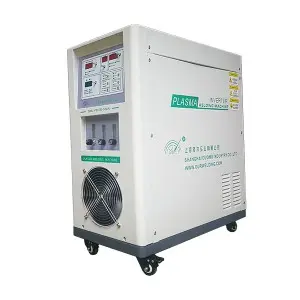
plasma powder surfacing machine DML-V03CD

Plasma Powder Surfacing Machine DML-V03CD

A highly stable power source combined with a precision micro-powder feeder. Ideal for thin-walled tubes and edge build-up on precision tools.
Request Quote
integrated multifunctional plasma powder welding

Integrated Multifunctional Plasma Powder Welding System

Combines PTA cladding, manual welding, and automated rotary table operation into a single space-saving workstation.
Request Quote
multifunctional plasma powder welding machine (DML-V02D)

Multifunctional Plasma Powder Welding Machine (DML-V02D)

Features a robust touchscreen interface with programmable parameters, designed for workshop remanufacturing of small components.
Request Quote
Laser cladding machine for blades

Laser Cladding Machine for Blades

Utilizes a high-precision laser source to apply wear-resistant layers to gas turbine and compressor blades with minimal distortion.
Request Quote
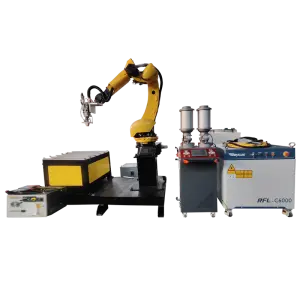
Laser hardening robot

Laser Hardening Robot

An automated robotic arm equipped with a hardening optical head for localized surface heat treatment of automotive and industrial dies.
Request Quote
Ball Valve Automated Welding Equipment DQF-LC602

Ball Valve Automated Welding Equipment DQF-LC602

Designed specifically for applying wear-resistant alloys to spherical valve surfaces, ensuring consistent quality and performance.
Request Quote

Testimonials & Practical Applications

See how our systems perform in demanding real-world industrial environments.

"The PTA Valve Cladding Guide helped us select the right process for our high-wear valves. Implementing the FB-200P system has allowed us to produce high-performance valve components that reliably handle high-temperature and corrosive flow conditions."
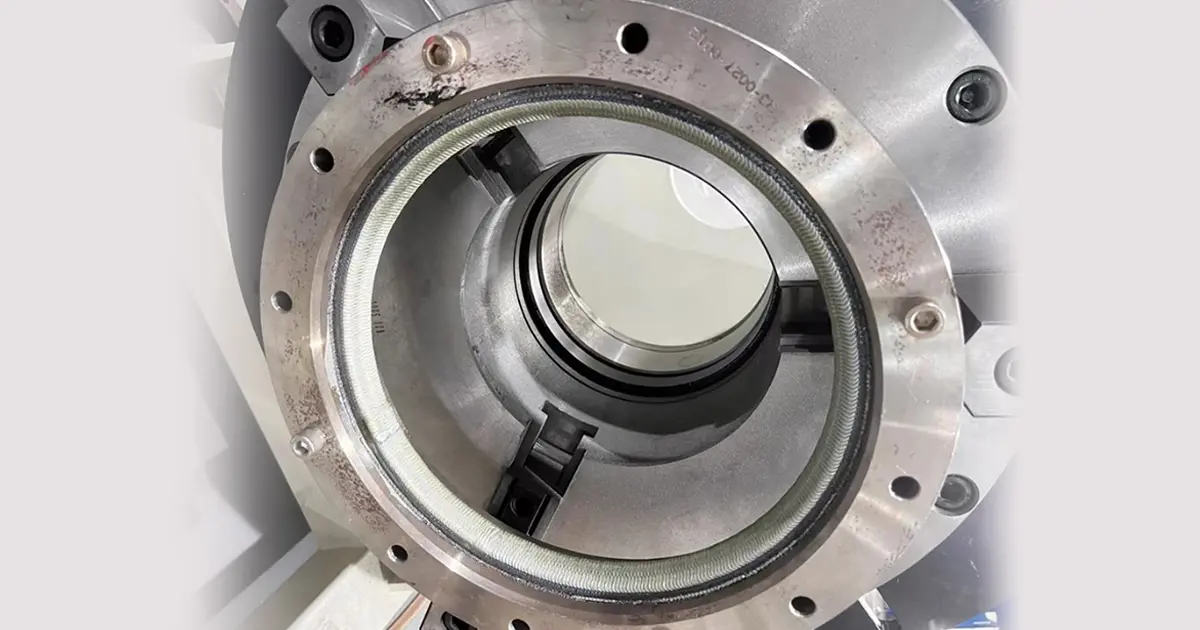
Valve Manufacturing QA Manager

"In our processing plants, conveyor screws are critical. Wear on these parts often leads to unscheduled maintenance. By hardfacing our screws with the DLG-NC401 system, we've significantly reduced down-time and extended their service life."
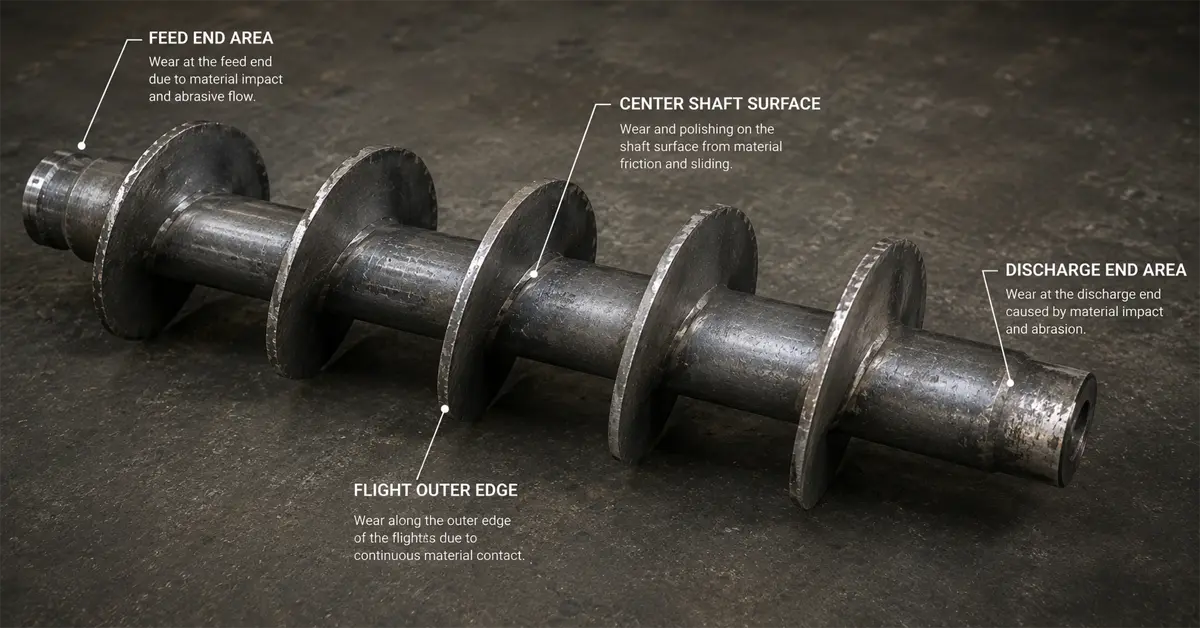
Mining Equipment Maintenance Engineer

"Controlling the dilution rate is essential when applying carbide alloys. Using Shanghai Duomu's PTA equipment, we've successfully kept dilution under 6% in a single pass, which has allowed us to optimize our powder usage while achieving excellent hardness."
Hardfacing Workshop Lead Metallurgist

"For heavy industries like power generation and mining, hardfacing is a key part of our maintenance strategy. The reliability of our equipment directly impacts our operational costs. Shanghai Duomu's PTA systems have helped us maintain consistent output and keep our maintenance schedule on track."
Power Generation Plant Maintenance Director

"Our industrial valves operate in high-pressure and corrosive environments. Using Shanghai Duomu's automated PTA cladding systems, we've achieved consistent stellite overlays that meet our strict quality standards for seal reliability."

Valve Plant Operations Manager

Global Customers & Partner Network

Expert Q&A: Understanding PTA Welding Technologies

In-depth technical answers for engineers and production managers evaluating PTA systems.

1. What is the typical dilution rate of a PTA weld, and how does it compare to laser cladding?
PTA (Plasma Transferred Arc) cladding typically achieves dilution rates between 5% and 10% in a single pass, which can be optimized down to around 3% depending on parameters. Laser cladding generally operates at a slightly lower dilution rate (1% to 5%) due to its highly concentrated beam, but requires a higher capital investment. Both processes provide a true metallurgical bond that outperforms traditional MIG or Submerged Arc welding, which often see dilution rates of 15% to 30%.
2. Can Duomu PTA systems run tungsten carbide (WC) alloy powders?
Yes, our PTA systems are designed to process tungsten carbide (WC) combined with nickel, cobalt, or iron-based matrices. The localized, controlled heat of the plasma arc minimizes carbide dissolution, allowing the hard particles to remain suspended in the matrix. This helps achieve excellent abrasion resistance in applications like mining picks, agricultural blades, and drilling tools.
3. How does PTA welding prevent thermal distortion in thin-walled components?
PTA cladding limits thermal distortion through its highly concentrated plasma column. This localizes the heat input, reducing the heat-affected zone (HAZ) compared to traditional arc processes. By optimizing travel speed, pilot arc current, and utilizing integrated water-cooling plates, operators can keep the overall heat input low, allowing for successful cladding on thinner parts.
4. What are the key maintenance requirements for a PTA cladding torch?
Typical maintenance includes regular inspection of the copper nozzle, tungsten electrode, and ceramic insulators. It is important to keep the water-cooling channels clear to prevent overheating. The powder injection ports should also be cleaned periodically to prevent powder buildup, which helps maintain a consistent, stable flow during operation.
5. Are Duomu systems compatible with robotic integration?
Yes, our PTA systems can be integrated with major industrial robotic arms, such as KUKA, FANUC, and ABB, using standard communication protocols. We also supply complete robotic packages, like the DH1440-B06, which include the PTA power source, powder feeder, torch, and robot arm pre-configured for automated 3D cladding paths.
6. What range of powder feed rates can the Duomu system handle?
Our powder feeders feature precision speed controls that allow for delivery rates from 5 grams/minute up to 120 grams/minute. This flexibility allows the system to handle both delicate, thin-layer surfacing and high-deposition-rate heavy cladding.
7. How does the system handle high-viscosity or complex alloys?
Our powder feeders utilize an optimized gas-carrier design that prevents clogging, even with heavier alloys like tungsten carbide or high-nickel powders. This helps ensure a stable, uniform flow into the plasma stream for consistent weld chemistry and profile.
8. What parameters are controlled by the system's PLC?
The touchscreen PLC controls all major parameters, including pilot arc current, transferred arc current, powder feed rate, gas flow rates (shielding, plasma, carrier), travel speed, and indexing movements. Program profiles can be saved for repeatable performance across production batches.

Ready to Upgrade Your Surface Engineering Performance?

Contact our technical department today to discuss your wear challenges, request a quote, or schedule a cladding feasibility test with your specific material powders.

Send Inquiry Now